
How to Use the 10 Days of Dhul Hijjah to Start Arabic Journey
The 10 best days of the year just started. Here’s how to make them matter for your family’s Islamic education.
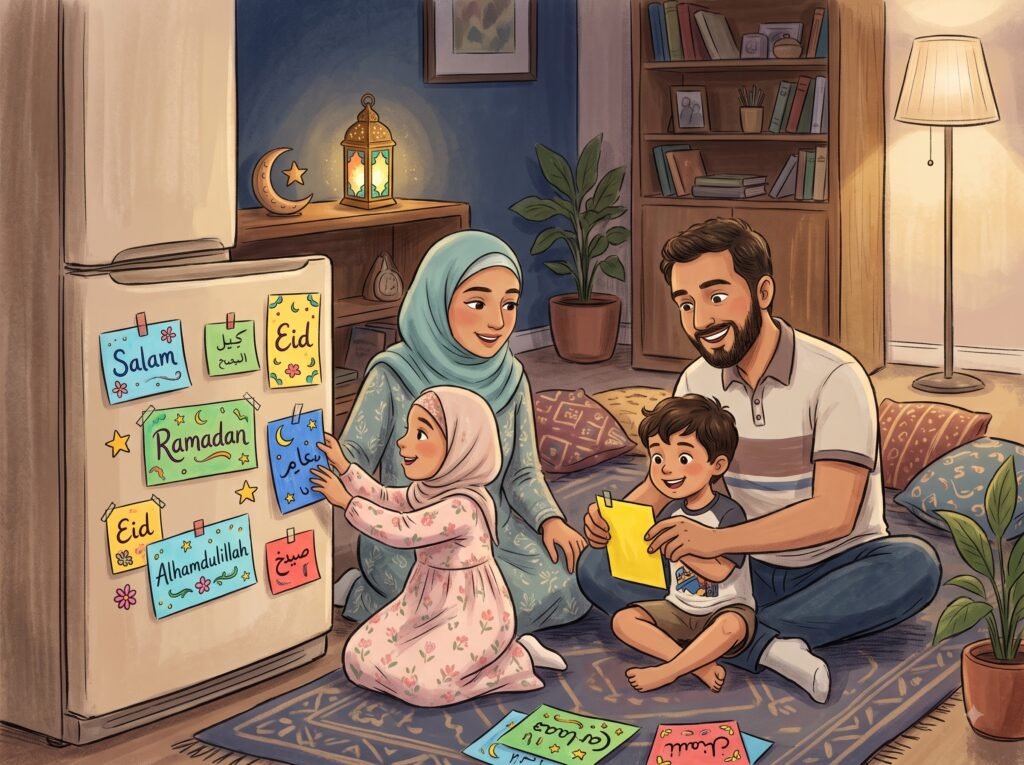
Every year, the first ten days of Dhul Hijjah arrive, and many of us feel the same tug: I want to do more with my kids this time.
Then life happens. The days pass, Eid comes, and the good intentions fade.
This year, try something different. Instead of adding a long to-do list, pick one small habit that lasts: Arabic. These are the best days of the year for Islamic education, and they are a natural time to help your children connect with the language of the Quran.
Below is a simple, ten-day plan. It takes about ten minutes a day and needs no Arabic background.
Why These 10 Days Are Special
The Prophet ﷺ taught that no righteous deeds are more beloved to Allah than those done in these ten days (narrated by al-Bukhari). They include the Day of Arafah, and they end with Eid al-Adha.
That makes them ideal for Dhul Hijjah family activities. Children see the whole family slow down, make dua, recite the takbir, and think about Hajj, sacrifice, and gratitude. Kids remember what they live, not just what they’re told.
Before You Start: Keep It Small
Three rules make this plan work:
- Ten minutes a day. Consistency beats intensity.
- One word or phrase at a time. Don’t overload little minds.
- Make it visible. Put a sheet of paper on the fridge titled “Our Dhul Hijjah Arabic Wall.” Add one new word each day.
Your Day-by-Day Arabic Dhul Hijjah Guide
Day 1: Understand the Takbir
Break down Allahu Akbar (“Allah is the Greatest”). Ask your children what “greatest” means to them. Recite the takbir together after Fajr. Wall word: أكبر (Akbar, greatest).
Day 2: Meet Hajj
Explain in simple terms that Hajj is a journey to Makkah that Muslims make to worship Allah. Wall word: حج (Hajj).
Day 3: Learn “Labbayk”
Teach Labbayk Allahumma labbayk, meaning “Here I am, O Allah, at Your service.” Ask: “When someone calls your name, what do you say?” Wall word: لبيك (Labbayk).
Day 4: Walk Like the Pilgrims
Have everyone walk seven times around a table or a room, counting in Arabic if you can. It’s silly, memorable, and a good way to explain how pilgrims circle the Kaaba. Wall word: طواف (Tawaf).
Day 5: Ibrahim and Ismail’s Dua
Tell the story of Prophet Ibrahim and his son Ismail (peace be upon them) as they raised the Kaaba. Then teach their dua from the Quran (2:127): Rabbana taqabbal minna, innaka Antas-Sami’ul-‘Alim. It means “Our Lord, accept this from us. You are the All-Hearing, the All-Knowing.” Wall word: ربنا (Rabbana, our Lord).
Day 6: Practice Sabr
Do a small patience challenge, like waiting ten minutes before a treat. Then connect it to Ibrahim’s trust in Allah. Wall word: صبر (Sabr, patience).
Day 7: Talk About the Udhiyah
Explain that Eid al-Adha remembers Ibrahim’s willingness to obey Allah, and that the meat is shared with family and those in need. Wall word: أضحية (Udhiyah, sacrifice).
Day 8: Pick Your Arafah Dua
Choose a short Arabic dua the whole family will make tomorrow. Practice it together until it feels familiar.
Day 9: The Day of Arafah
This is the peak of the ten days. The Prophet ﷺ said that fasting on Arafah expiates the sins of the previous and coming year (Sahih Muslim), and that the best dua is the dua of Arafah (al-Tirmidhi). Older children can fast, and younger ones can join in the dua. Try this well-known one: La ilaha illallah wahdahu la sharika lah, lahul-mulku wa lahul-hamd, wa huwa ‘ala kulli shay’in qadir. Wall word: عرفة (Arafah).
Day 10: Eid Mubarak, and a New Beginning
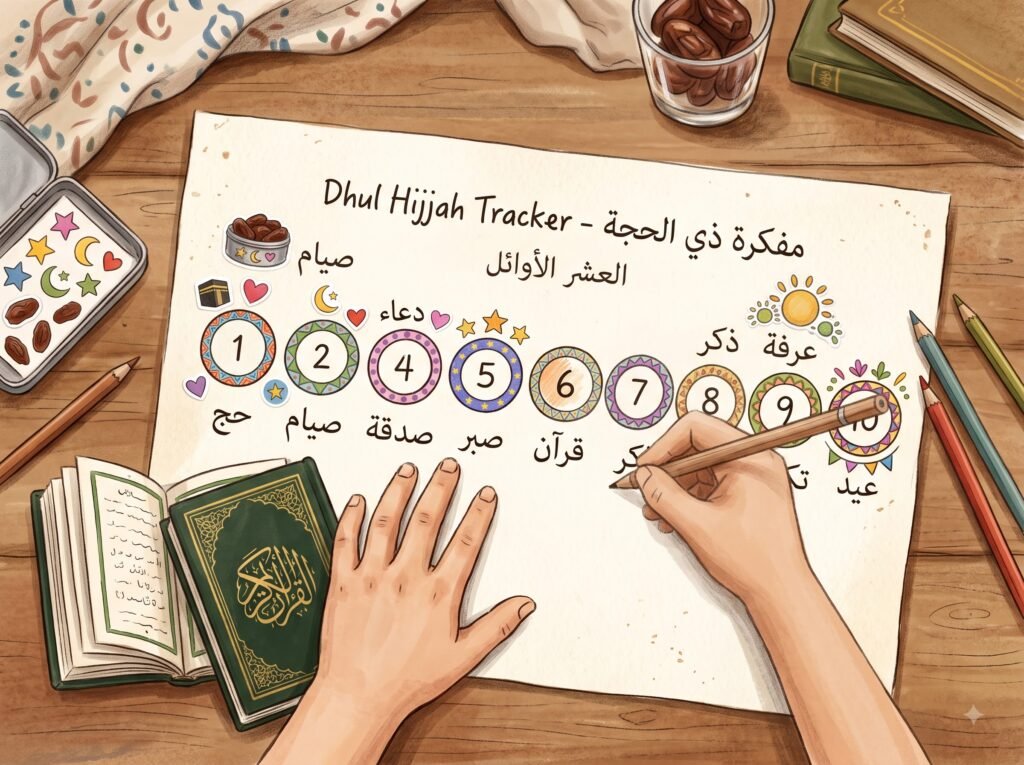
Greet each other with Eid Mubarak (عيد مبارك). Then, as a family, set one goal: “10 minutes of Arabic every day.” Draw a simple tracker and stick it on the wall next to your Arafah words. Wall word: عيد (Eid).
How to Keep the Habit After Eid
The ten days spark the habit, and the weeks after decide whether it lasts. A few tips:
- Pair Arabic with something you already do, like reviewing one word over breakfast.
- Celebrate small wins. A sticker for every seven days works well.
- Let kids teach you. Children who explain a word to a parent remember it far longer.
- Get a guide. A qualified teacher gives children structure, feedback, and confidence that a busy household can’t always provide.
Wondering whether your child is ready? Read our guide: At What Age Should Muslim Children Start Arabic?
Quick FAQs
Do we need to know Arabic to do this?
No. Learn alongside your kids. Children love seeing their parents learn too.
Is it too late if Dhul Hijjah has already started?
Not at all. Start on whichever day you are, and repeat the plan next year or any time you want a fresh start.
How can we do this with more than one child?
Give older kids the role of “word teacher” and let the little ones decorate the wall.
Start Your Family’s Arabic Journey
These ten days are a gift, and a family that learns Arabic together builds a deeper bond with the Quran for life.
Start your family’s Arabic journey at Roots. Book a free trial class today.
