
Ar-Rahman vs Ar-Rahim
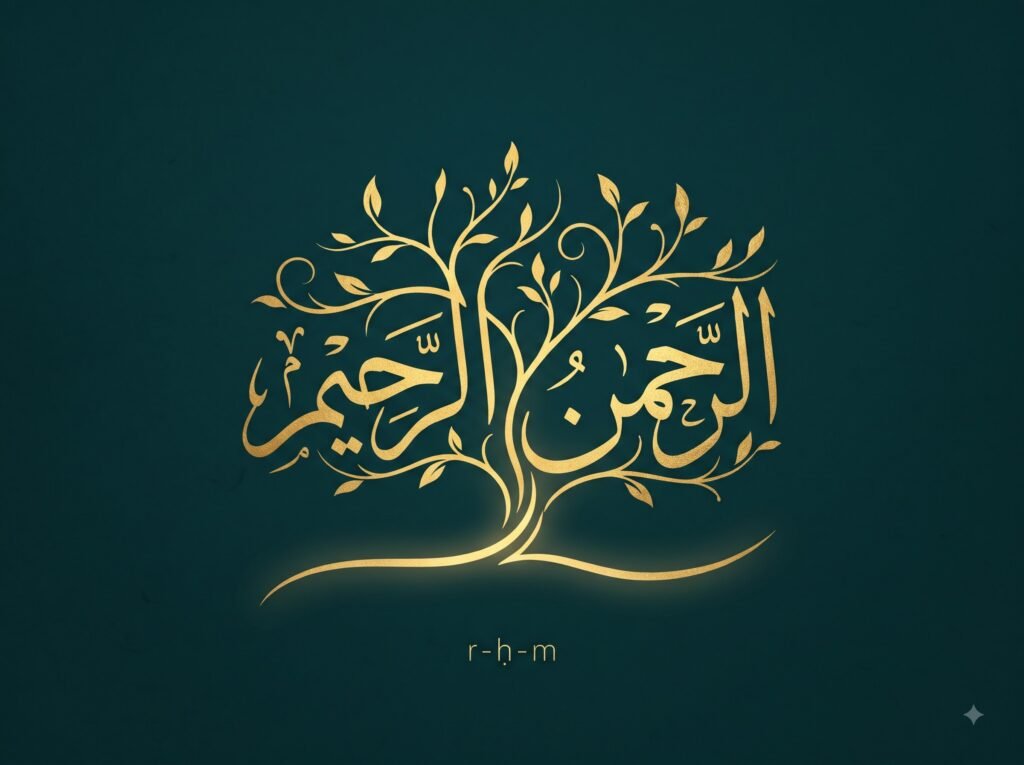
We say Bismillah dozens of times a day. Before we eat, drive, study, or begin a prayer, the words roll off the tongue almost automatically. But do we understand the two different mercies of Allah we are invoking?
Here is the linguistic and theological explanation, in plain English.
Why Does Bismillah Name Allah’s Mercy Twice?
Bismillāhir-Raḥmānir-Raḥīm means “In the name of Allah, the Most Merciful, the Especially Merciful.” Many people assume the last two words say the same thing, as if the phrase were stressing mercy by repeating it.
Arabic rarely repeats without purpose. These are two distinct names, and the difference begins with their shared origin.
1. One Root, Two Meanings
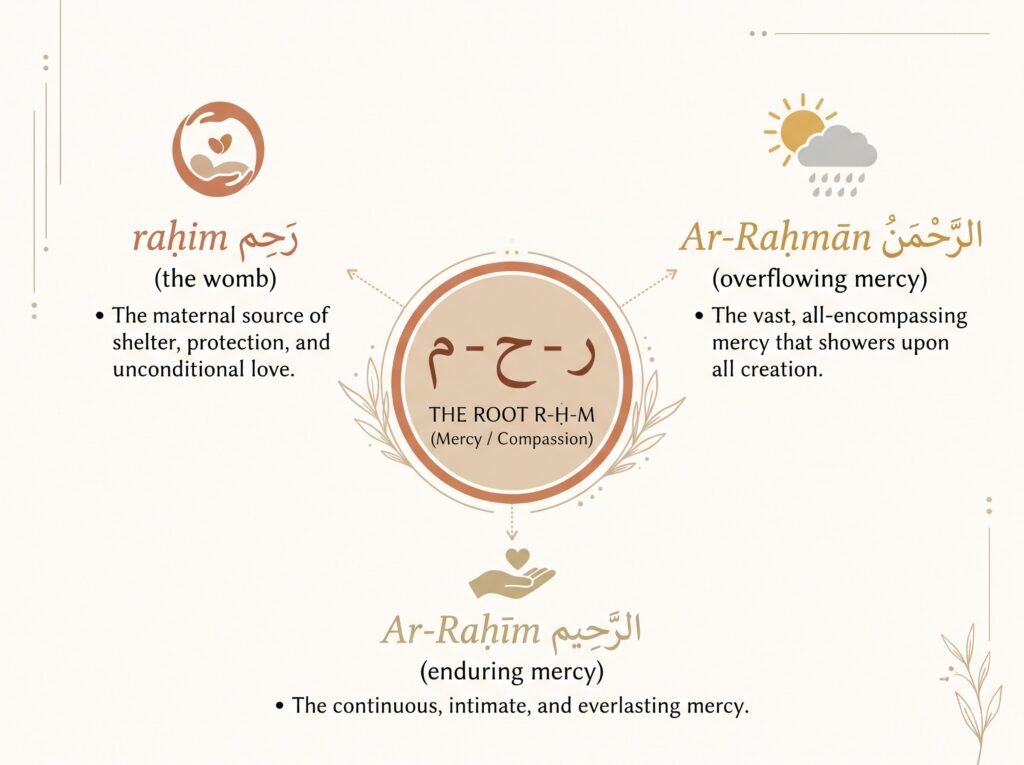
Both Ar-Rahman (الرحمن) and Ar-Rahim (الرحيم) come from the Arabic root ر-ح-م (r-ḥ-m). Arabic is built on roots like this: a three-letter core that generates a whole family of related words.
The same root gives us raḥim (رَحِم), the womb. Think about what a womb is. It is a place of protection, warmth, and nourishment, where a life is held safely before it can care for itself. It gives without being asked and shelters without being earned.
This is the first clue to the ArRahman ArRahim meaning: mercy is not a distant feeling of pity. It is care that surrounds and sustains. The Prophet ﷺ made this link explicit in a well-known hadith, teaching that the word raḥim is derived from one of Allah’s own names, which is why family ties are treated as something sacred.
Yet the two names are not duplicates. They share a root, but each describes a different side of Allah’s mercy:
- Ar-Rahman points to mercy in its fullness, vast and overflowing, reaching all creation.
- Ar-Rahim points to mercy in its continuity, lasting and personal, especially for those who turn to Him.
One name is the ocean. The other is the water carried to your door.
Why This Matters Every Time You Say Bismillah
Once you notice the root, the phrase changes. You are not repeating a formula. You are starting each action by acknowledging that you are held by a mercy that is both limitless and intimate.
In the next section we will break down the Arabic word patterns faʿlān and faʿīl, which explain exactly why one name describes mercy that overflows and the other mercy that endures.
Keep learning:
- Explore more in The 99 Names of Allah in Arabic
- Build your foundation with our Quranic Arabic course
Want to understand more names of Allah in Arabic?
Join our Quran Arabic program. Your first lesson is free.
