
Arabic for Kids Beginners
You do not need to speak Arabic to help your child learn it. Here is exactly what to do, week by week, from absolute zero.
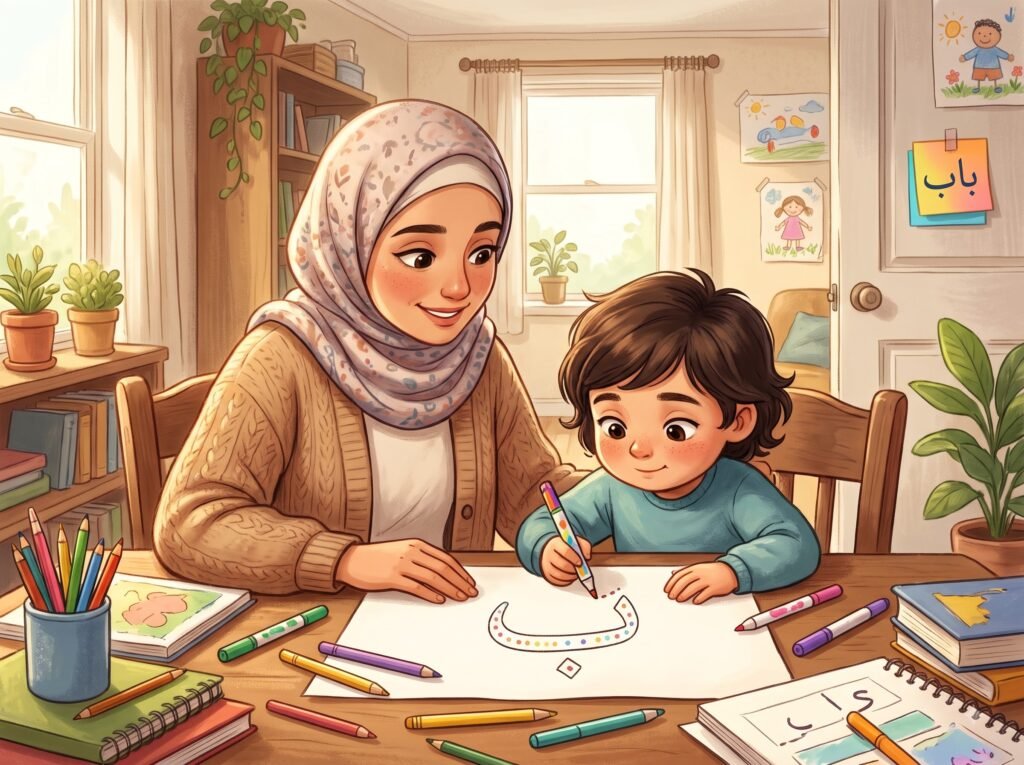
If you are a Muslim parent who wants your child to read and understand the Quran but doesn’t speak Arabic yourself, you are far from alone. Millions of families are in the same position. Many of them quietly worry that they can’t help, so they put it off.
Here is the good news. Young children don’t need a fluent teacher at home. They need play, repetition, and routine, and you can provide all three starting tonight. Here is a simple four-week plan, plus one final step that makes everything easier.
Week 1: Start with Sounds, Not Letters
Before your child sees a single letter, let them hear Arabic. Children pick up language through their ears long before their eyes.
- Play a short Arabic nursery rhyme or a gentle Quran recitation for about 5 minutes a day.
- Listen together, in the car, at breakfast, or before bed.
- Invite your child to copy the sounds. Don’t correct them yet.
Aim for familiarity, not perfection. This listening habit is the foundation of every successful Arabic for kids beginners journey.
Week 2: Learn 5 Letters, One at a Time
This week, introduce just five letters: Alif (ا), Baa (ب), Taa (ت), Thaa (ث), and Jeem (ج). Teach one letter per day.
- Say the letter’s name and sound clearly.
- Trace its shape in the air together.
- Write it on paper, or draw it in a tray of sand or rice.
Keep each session to about 5 to 10 minutes. Short daily practice beats one long weekly lesson, because little minds learn best in small, regular bites.
Week 3: Turn Letters into Everyday Words
Now make the letters real. Pick one household object for each letter and label it with a sticky note:
- باب (baab), the door, starts with Baa
- تمر (tamr), dates, starts with Taa
- ثلاجة (thallaaja), the fridge, starts with Thaa
- جزر (jazar), carrots, starts with Jeem
Every time your child opens the fridge or grabs a snack, they see Arabic in action. This is one of the easiest ways to learn how to teach kids Arabic at home, because the language stops being a school subject and becomes part of daily life.
Want more ideas like this? Try our guide to Arabic games for kids.
Week 4: Build a Tiny Daily Routine
By now your child has heard, seen, and used Arabic. Week 4 is about making it stick.
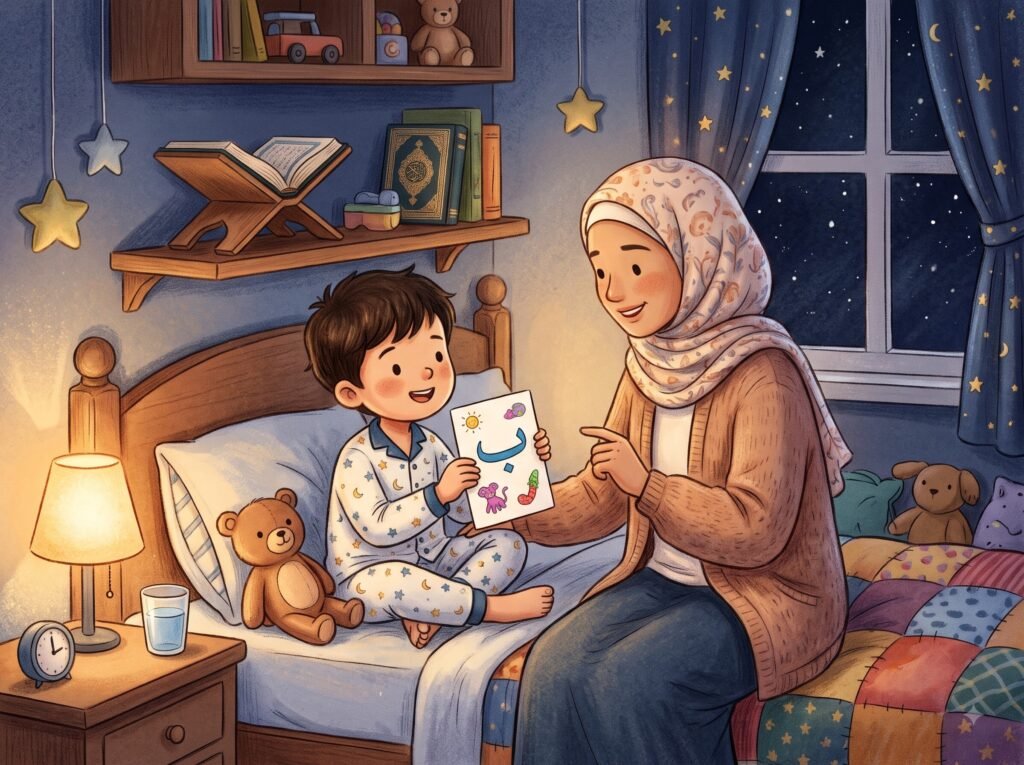
Choose one fixed time, such as after dinner or before bed, and spend 10 minutes on Arabic:
- Review the week’s letters
- Learn one new word
- Finish with a short dua or a Quran verse they already know
This last step matters. When children connect Arabic with prayer and faith, it stops feeling like homework. For Muslim kids learning Quran Arabic, that emotional link is powerful and lasting. Consistency matters far more than length.
The Final Step: Add a Teacher Who Speaks the Language
Home practice builds the habit. A qualified teacher builds the skill.
Once your child knows the basics, a tutor can correct pronunciation, spot small mistakes early, and keep your child motivated, which is hard to do alone. Arabic lessons for children online make this simple. Your child learns from a patient, trained teacher while you stay close by at home, with no commute and no fixed classroom.
Our Kids Arabic course is designed to work alongside the routine you’ve just built, so nothing you have done at home goes to waste.
You Only Have to Start
You don’t have to be fluent to raise a child who loves Arabic. You only have to show up, ten minutes at a time. Every sound, every sticky note, and every bedtime dua is a step toward a child who can one day open the Quran and read it with confidence.
Ready to book your child’s first lesson?
Use code KIDS20 for 20% off the first month. Book the first lesson here
