
Quran activities kids: How to Make Quran Time Fun
Many parents imagine calm, meaningful Quran time with their children—but in real life, it often turns into a daily struggle. Within minutes, kids lose focus, feel restless, or say they’re bored. For non-Arab Muslim families, this challenge can feel even greater when children don’t understand the language. That’s where the right Quran activities kids respond to can make all the difference.
The good news is this: the issue isn’t your child, and it’s not your parenting effort. It’s how Quran time is structured. When learning feels rigid or pressured, children naturally push back. Shifting the focus to engaging Quran activities for kids, rather than discipline alone, helps transform resistance into interest and makes Quran time more enjoyable for everyone.
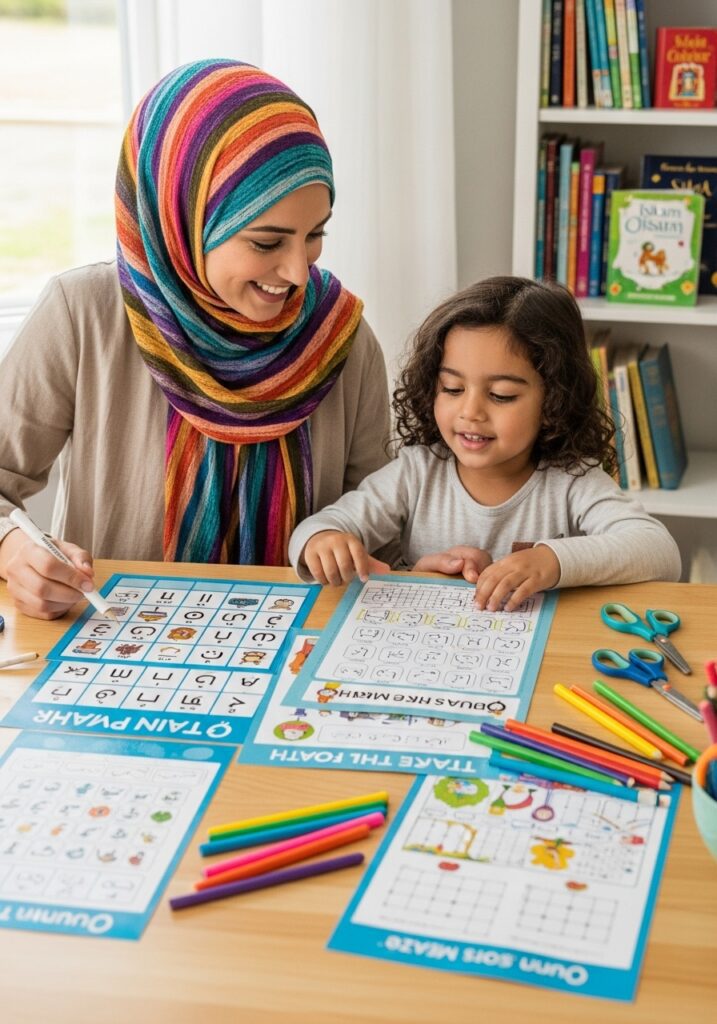
Why Kids Resist Traditional Quran Lessons
Before fixing the problem, it helps to understand it.
Many children struggle with Quran lessons because:
- The sessions are too long for their attention span
- They feel pressure to “perform” or pronounce perfectly
- The learning style doesn’t match how kids naturally learn
- There’s little room for play, creativity, or choice
For kids—especially beginners—Quran time can start to feel like a test instead of a meaningful experience. This is where Quran activities for kids make a powerful difference.
Turn Quran Recitation Into a Game (Not a Task)
Children learn best through play. When Quran learning feels like a game, motivation rises naturally.
Here are a few simple ideas:
- Sound repetition games: Repeat one letter or word together and let your child “teach” it back
- Point-and-read challenges: Who can find a letter or word first?
- Listening games: Play a short ayah and ask kids to identify familiar sounds
These playful Quran activities for kids build familiarity and confidence—without pressure or fear of mistakes.
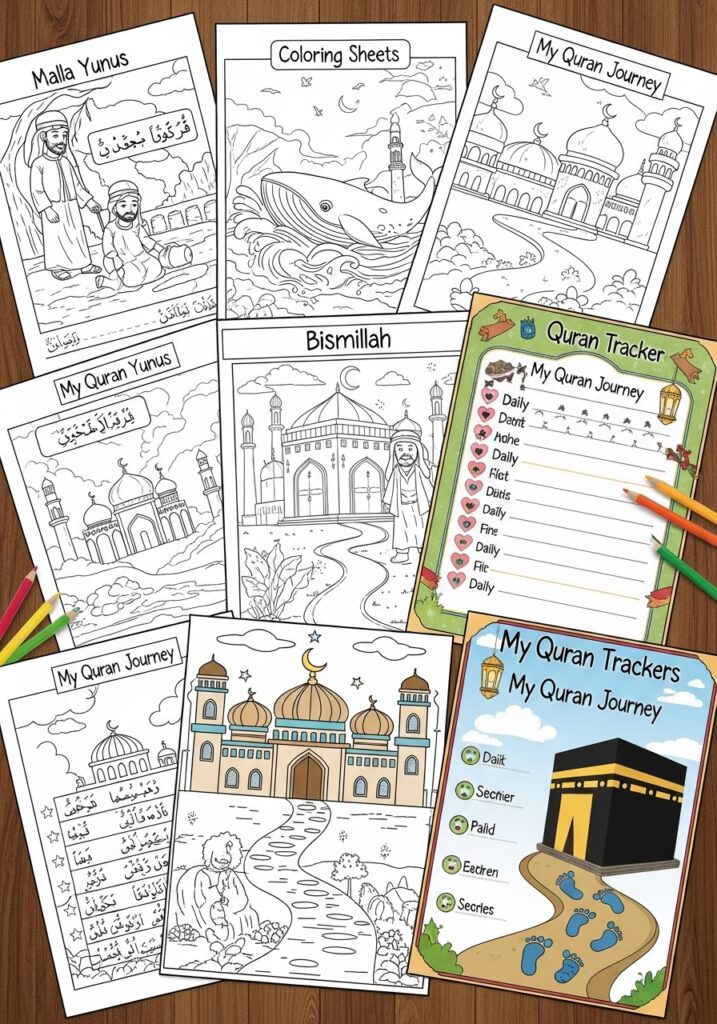
Use Printable Trackers and Coloring Sheets to Boost Motivation
One of the easiest ways to keep kids engaged is by letting them see their progress.
Printable resources help by:
- Giving children a sense of achievement
- Turning Quran time into a visual routine
- Reducing parent-child tension during lessons
Simple tools like:
- Weekly Quran habit trackers
- Coloring sheets for letters or short surahs
- Sticker-based reward charts
These small wins create positive associations with Quran time and encourage consistency—without bribing or forcing.
Make Quran Time Short, Predictable, and Positive
Instead of long lessons, aim for:
- 5–10 minutes daily
- The same time each day (after Maghrib or before bed works well)
- Ending the session on a positive note—even if it’s short
Consistency matters more than duration. A short, enjoyable routine supported by fun Quran activities for kids is far more effective than long, stressful sessions.
Final Thoughts: Love Comes Before Fluency
Your child doesn’t need to love Tajweed rules right away—but they should feel safe, encouraged, and happy during Quran time. When engagement comes first, skills follow naturally.
Try our fun Quran activity printables designed for young learners and turn Quran time into a moment your child actually looks forward to.
