10 Arabic Words Kids Hear in Salah — And What They Really Mean
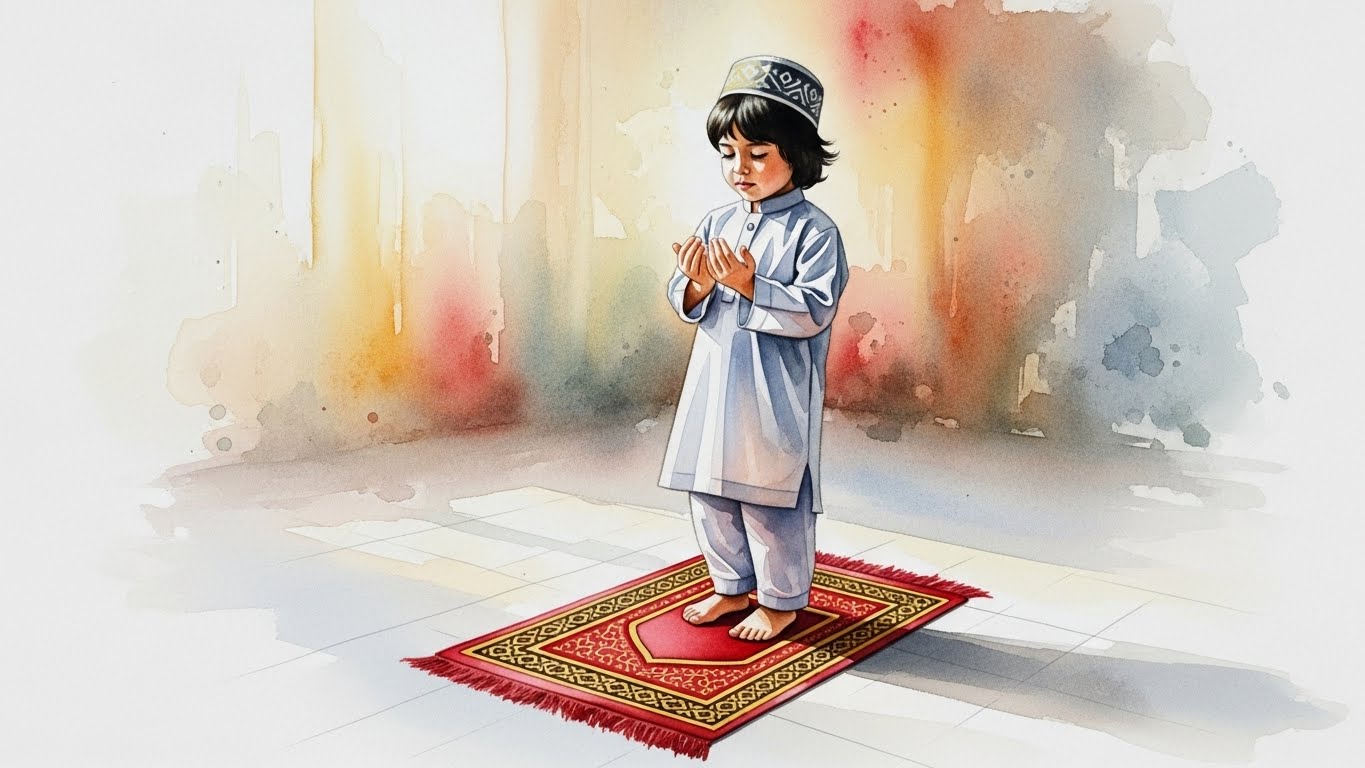
Many parents don’t realize that their children are already learning arabic vocabulary kids use every single day — simply by praying Salah. Words like Allah, Rabb, and Sirat are repeated often, yet for non-native Arabic speakers, they can remain sounds without meaning unless we explain them clearly.
When children understand these words through Arabic roots, Salah transforms from memorized recitation into meaningful worship.
🌱 Why Roots Matter in Arabic (Simple Explanation for Parents)
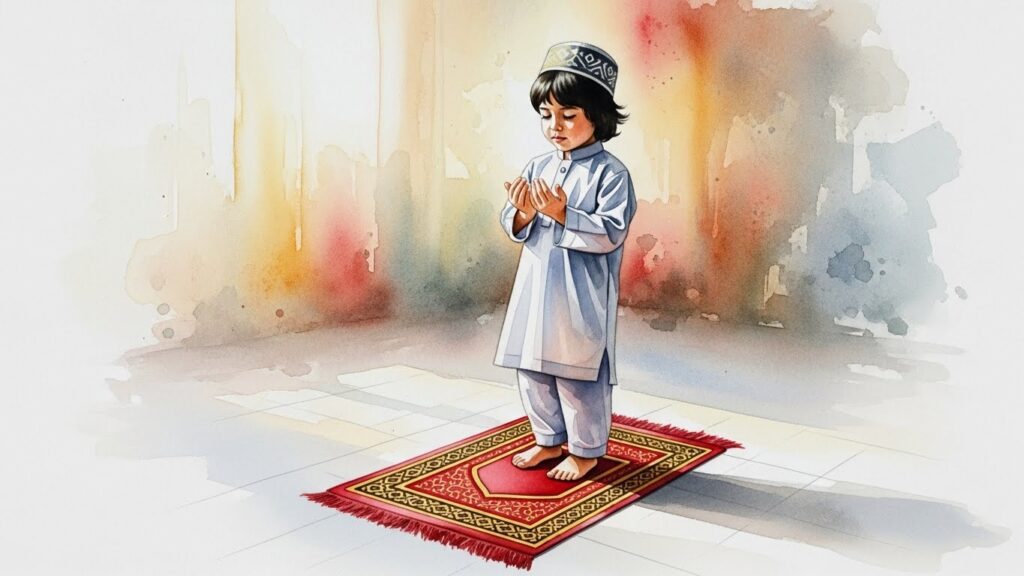
Arabic words are built from roots, usually three letters.
The root carries the core meaning, and many words grow from it — like branches from a tree.
Instead of memorizing dozens of translations, children who learn roots begin to:
- Recognize patterns
- Guess meanings
- Feel confident reading Qur’an
Now, let’s start with the words they already hear every day.
🕌 1. الله (Allah)
Root: أ ل ه
This root carries the meaning of worship, devotion, and turning to One.
👉 Allah is not just “God” —
He is the One every heart turns to.
Child-friendly meaning:
Allah is the One we love, worship, and ask for help.
🕌 2. رَبّ (Rabb)
Root: ر ب ب
This root means to nurture, grow, care for, and raise.
👉 Rabb is not only “Lord” —
It means the One who takes care of everything.
Child-friendly meaning:
Rabb is the One who looks after us every day.
🕌 3. الهُدى (Hudā)
Root: ه د ي
This root means guidance and leading gently.
👉 Hudā is not just “guidance” —
It’s being shown the right path with kindness.
Child-friendly meaning:
Hudā is Allah showing us the right way.
🕌 4. الصِّرَاط (Sirāt)
Root: ص ر ط
This root means a clear, straight path.
👉 Sirāt is not just a road —
It’s a path that leads directly to what is right.
Child-friendly meaning:
Sirāt is the straight way Allah loves.
🕌 5. غَفَرَ (Ghafara)
Root: غ ف ر
This root means to cover, protect, and forgive.
👉 Forgiveness in Arabic means Allah covers our mistakes, not exposes them.
Child-friendly meaning:
Allah forgives and protects us when we say sorry.
🕌 6. الرَّحْمَٰن (Ar-Rahmān)
Root: ر ح م
This root is linked to mercy, care, and the womb.
👉 Mercy in Arabic is deep love and protection.
Child-friendly meaning:
Allah is full of love and mercy.
🕌 7. الحَمْد (Al-Hamd)
Root: ح م د
This root means praise with love and gratitude.
👉 Hamd is more than “thank you” —
It’s loving appreciation.
Child-friendly meaning:
We thank Allah because we love Him.
🕌 8. نَعْبُدُ (Na‘budu)
Root: ع ب د
This root means serving with love and obedience.
👉 Worship is not forced —
It’s done with care and choice.
Child-friendly meaning:
We worship Allah because we love Him.
🕌 9. نَسْتَعِينُ (Nasta‘īn)
Root: ع و ن
This root means help and support.
👉 Asking for help is part of faith.
Child-friendly meaning:
We ask Allah to help us always.
🕌 10. آمين (Āmīn)
Root: أ م ن
This root means security, safety, and trust.
👉 Saying Ameen means: “I trust Allah.”
Child-friendly meaning:
Ameen means “Please accept, Allah.”
🌟 How This Helps Children (Parent Benefit)
When kids understand these words:
- Salah becomes personal
- Duas feel real
- Qur’an reading feels less scary
- Arabic becomes a language of meaning, not memorization
This is how children move from reciting to connecting.
🏡 Simple Tip for Parents at Home
Choose one word per week from Salah.
- Say it
- Explain the root
- Find it in Salah
- Use it in a short dua
Small steps create lifelong understanding.
✨ Final Thought
When arabic vocabulary kids learn is connected to roots and meaning, Salah becomes more than routine — it becomes a heartfelt conversation with Allah.
