
10 Duas Every Parent Should Teach Their Child Before Age 10 (Meaning & Easy Practice Tips)
Introduction (SEO-Optimized)
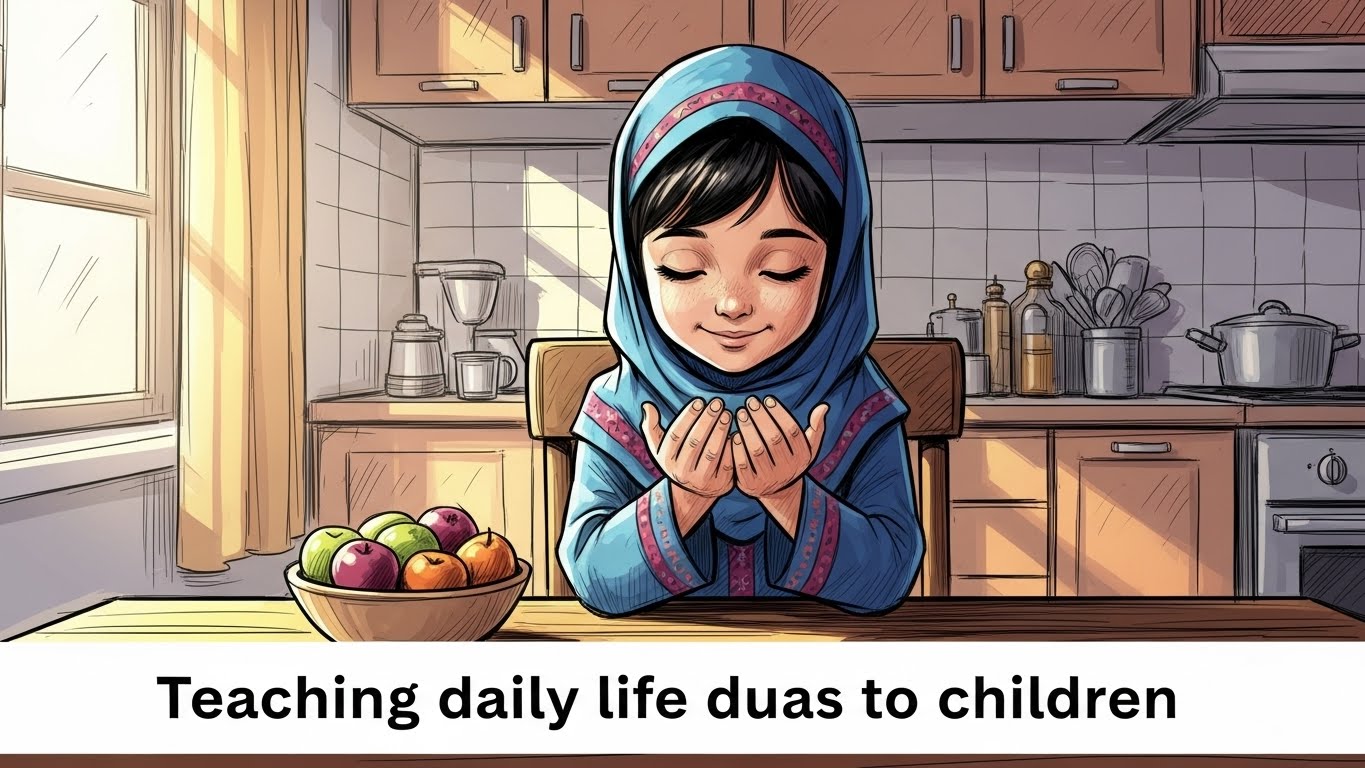
Teaching children the power of duas for kids from a young age lays the foundation for a strong spiritual connection with Allah. Simple, daily duas not only help children feel safe and grateful, but also instill good habits that last a lifetime. In this guide, we share 10 essential duas every parent should teach their child before age 10, along with meanings and practical tips for daily practice.
1. Why Teaching Duas Early Matters
Introducing duas early strengthens children’s awareness of Allah and builds emotional resilience. Kids learn to turn to Allah in moments of happiness, fear, or challenge. Establishing these routines before age 10 ensures the practice becomes natural and meaningful.
2. Daily Life Duas
1. Dua When Waking Up
Arabic: الْحَمْدُ لِلَّهِ الَّذِي أَحْيَانَا بَعْدَ مَا أَمَاتَنَا وَإِلَيْهِ النُّشُورُ
Transliteration: Alhamdulillahi alladhi ahyana ba’da ma amatana wa ilayhin-nushoor
Meaning: Praise be to Allah who gave us life after He caused us to die, and to Him is the return.
Practice Tip: Encourage your child to say it aloud every morning.
2. Dua Before Eating
Arabic: بِسْمِ اللَّهِ وَبَارَكَ اللَّهُ لَنَا فِيهِ وَزِدْنَا مِنْهُ
Transliteration: Bismillah wa barakallahu lana fihi wa zidna minhu
Meaning: In the name of Allah, and may Allah bless it for us and give us more.
Practice Tip: Recite together at meal times for a fun habit.
3. Dua After Eating
Arabic: الْحَمْدُ لِلَّهِ الَّذِي أَطْعَمَنَا وَسَقَانَا وَجَعَلَنَا مُسْلِمِينَ
Transliteration: Alhamdulillahi alladhi at’amana wa saqana wa ja’alna muslimin
Meaning: Praise be to Allah who fed us, gave us drink, and made us Muslims.
Practice Tip: Fold hands or smile while reciting to reinforce gratitude.
4. Dua Before Sleeping
Arabic: بِاسْمِكَ اللّهُمَّ أَمُوتُ وَأَحْيَا
Transliteration: Bismika Allahumma amutu wa ahya
Meaning: In Your name, O Allah, I die and I live.
Practice Tip: Say it together at bedtime; pair with a quiet reflection.
5. Dua Before Leaving Home
Arabic: بِسْمِ اللَّهِ تَوَكَّلْتُ عَلَى اللَّهِ وَلَا حَوْلَ وَلَا قُوَّةَ إِلَّا بِاللَّهِ
Transliteration: Bismillahi tawakkaltu ‘ala Allah wa la hawla wa la quwwata illa billah
Meaning: In the name of Allah, I place my trust in Allah, and there is no might nor power except with Allah.
Practice Tip: Make it a daily habit when going to school or outside.
3. Emotional Duas
Children often feel fear, sadness, or worry. Teaching short, simple duas helps them turn to Allah for comfort.
6. Dua for Protection (Fear)
Arabic: أَعُوذُ بِكَلِمَاتِ اللَّهِ التَّامَّةِ مِنْ شَرِّ مَا خَلَقَ
Transliteration: A’udhu bikalimatillahi tammati min sharri ma khalaq
Meaning: I seek refuge in the perfect words of Allah from the evil of what He created.
Practice Tip: Recite when feeling scared.
7. Dua for Gratitude
Arabic: رَبِّ أَوْزِعْنِي أَنْ أَشْكُرَ نِعْمَتَكَ الَّتِي أَنْعَمْتَ عَلَيَّ
Transliteration: Rabbi awzi’ni an ashkura ni’mataka allati an’amta ‘alayya
Meaning: My Lord, enable me to be grateful for Your favor upon me.
Practice Tip: Use after completing chores or small achievements.
8. Dua When Feeling Sad
Arabic: اللّهُمَّ إِنِّي أَعُوذُ بِكَ مِنَ الْهَمِّ وَالْحَزَنِ
Transliteration: Allahumma inni a’udhu bika minal-hammi wal-hazan
Meaning: O Allah, I seek refuge in You from anxiety and sorrow.
Practice Tip: Recite during stressful or sad moments.
4. Duas for Knowledge & Health
9. Dua for Knowledge
Arabic: رَبِّ زِدْنِي عِلْمًا
Transliteration: Rabbi zidni ilma
Meaning: My Lord, increase me in knowledge.
Practice Tip: Say before school or Quran study.
10. Dua for Good Health
Arabic: اللَّهُمَّ عَافِنِي فِي جَسَدِي وَسَمْعِي وَبَصَرِي
Transliteration: Allahumma ‘afini fi jasadi wa sam’i wa basari
Meaning: O Allah, grant me health in my body, hearing, and sight.
Practice Tip: Recite after morning routine or before playing outside.
5. Simple Memorization Tips for Kids
- Break the dua into small, easy-to-pronounce sections.
- Use repetition through daily routines.
- Create visual aids like dua cards or illustrated books.
- Make it fun: use games, songs, or storytelling to reinforce memory.
Memorizing early ensures the duas stay with them naturally.
Conclusion
Teaching duas for kids before age 10 is more than memorization; it nurtures faith, emotional intelligence, and gratitude. By incorporating daily life and emotional duas, and using simple memorization tips, parents can guide children to a lifetime of meaningful connection with Allah.
Start teaching your child one dua today and watch them grow spiritually!
