
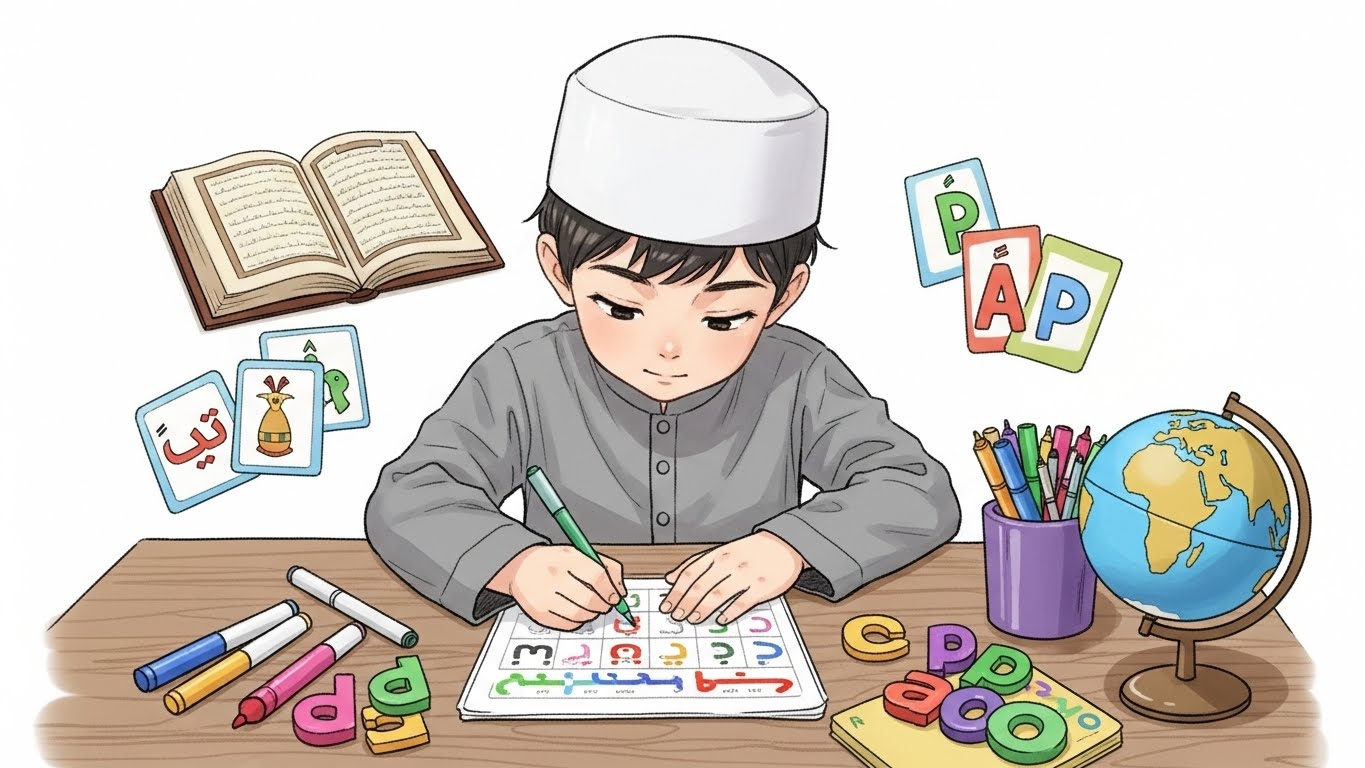
They All Look the Same!” Why Harakat Confuse Young Learners (And How to Fix It)
🧠 Introduction: “They All Look the Same!”
When it comes to arabic vowels kids often feel overwhelmed before real learning even begins.
Many children look at ـَ ـِ ـُ and say, “They all look the same.” And from a child’s point of view, they’re not wrong. These tiny vowel marks are visually subtle, placed above and below letters, and introduced very early—before a child’s brain is fully ready to separate them.
Understanding why arabic vowels kids struggle is the first step to teaching harakat successfully.
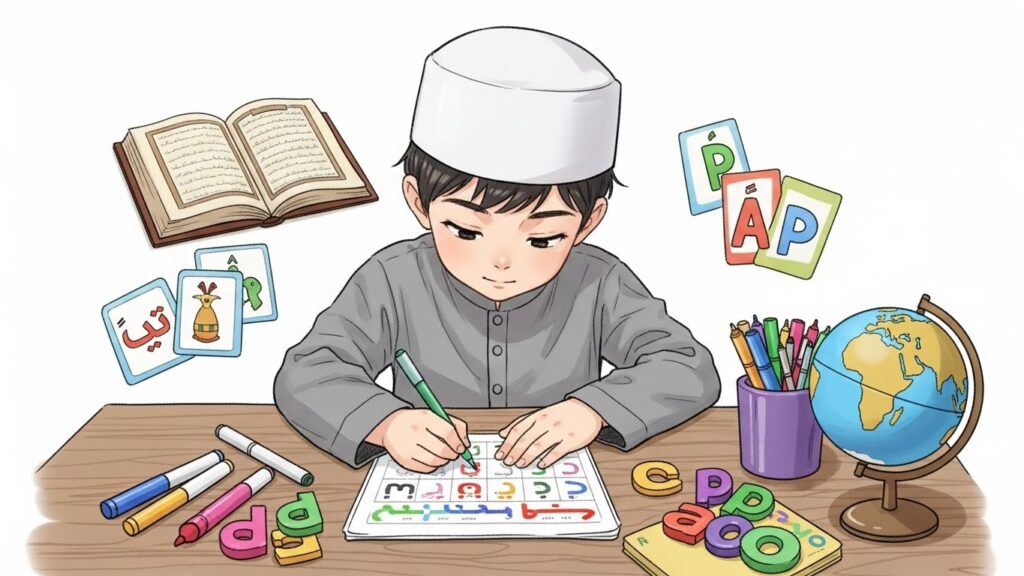
🧠 How Children’s Brains Process Symbols
Children’s brains are still developing their ability to:
- Notice small visual differences
- Track symbol placement (above vs below)
- Attach meaning to abstract marks
Arabic letters are large and distinct. Harakat, however, are:
- Small
- Similar in shape
- Easy to miss
This makes learning harakat especially challenging for young learners.
🖤 Why Black-and-White Worksheets Often Fail
Many traditional resources for arabic vowels kids rely on black-and-white worksheets packed with tiny symbols.
The problem?
- No visual contrast
- Little spacing
- Too many concepts at once
Instead of helping, this overloads a child’s visual system and leads to guessing, frustration, or avoidance.
🎨 The Role of Color and Spacing in Learning Harakat
Children learn through patterns, not pressure.
Using color helps the brain separate similar-looking symbols instantly.
A proven color system:
- 🔴 Fatha (ـَ) = Red
- 🔵 Kasra (ـِ) = Blue
- 🟢 Damma (ـُ) = Green
Add generous spacing and larger symbols, and suddenly arabic vowels kids can see the difference instead of memorizing blindly.
✅ How to Fix It: Teach Harakat the Kid-Friendly Way
To make learning harakat effective and stress-free:
- Teach one harakah at a time
- Use consistent colors everywhere
- Say the sound before reading
- Keep practice short and playful
This approach respects how children learn and builds long-term confidence with arabic vowels kids.
🌱 Final Thoughts
Harakat aren’t confusing because children are slow.
They’re confusing because they’re small.
When teaching methods match brain development, arabic vowels kids don’t just recognize harakat—they understand them, enjoy them, and remember them.
