
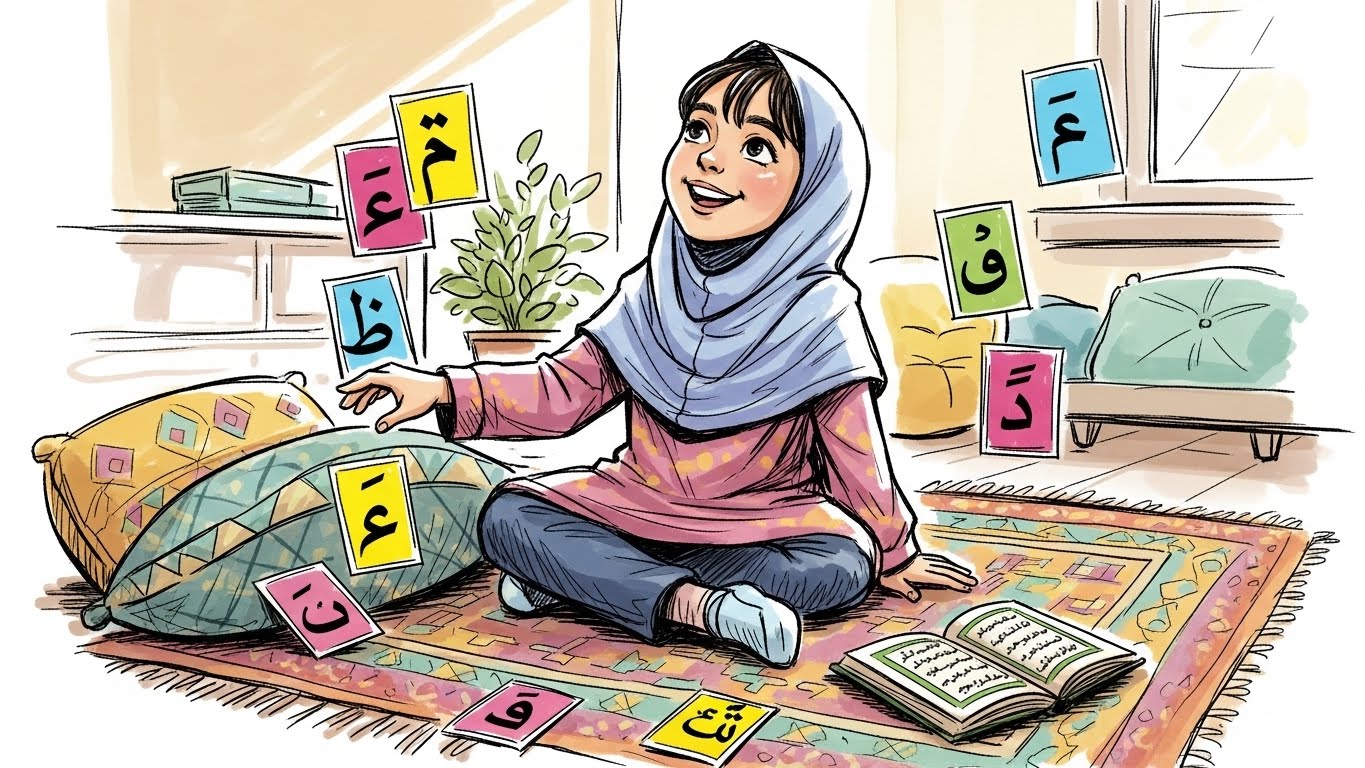
🌱 Turn Letters into Fun: 3 Tajweed Games for Kids at Home
Learning tajweed doesn’t have to feel like a chore. With the right approach, children can enjoy every letter, every sound, and every ayah they recite. At Roots Muslim School, we believe learning through play is the key to helping children build confidence and love for the Qur’an.
Here are 3 simple tajweed games you can play at home that make Arabic letters exciting and memorable:
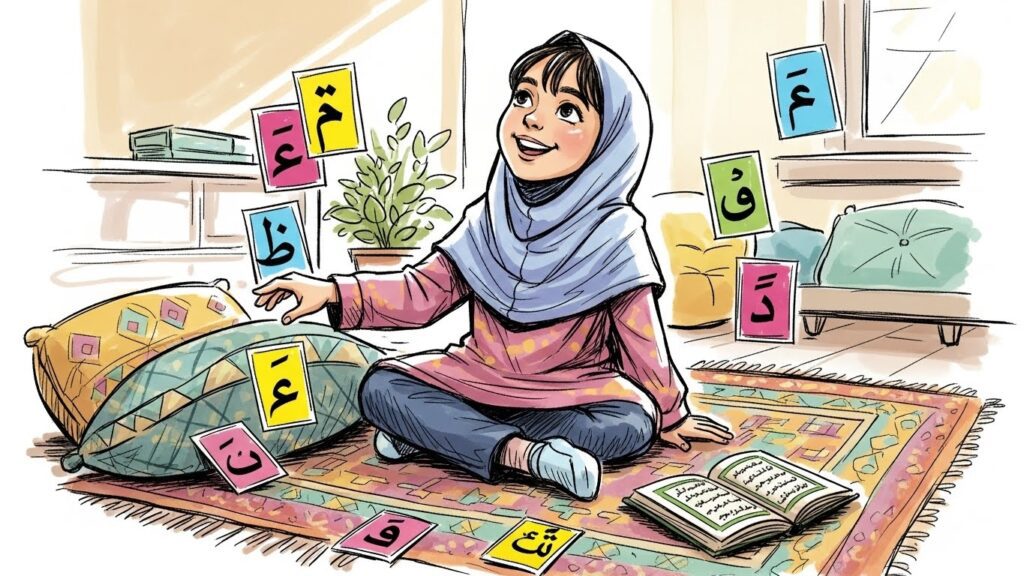
1️⃣ Letter Treasure Hunt
How it works:
- Write Arabic letters or tajweed symbols on small cards and hide them around the room.
- Ask your child to find a card and recite the letter or practice its pronunciation correctly before collecting it.
Why it works:
This game reinforces letter recognition and proper pronunciation while keeping the activity playful and interactive. Children learn tajweed naturally without feeling pressured.
Pro tip: Add small rewards, like stickers or stars, to celebrate correct recitation.
2️⃣ Tajweed Matching Game
How it works:
- Create pairs of cards: one with the Arabic letter, one with the tajweed rule or symbol it represents.
- Mix them up and challenge your child to match the letter with the correct tajweed rule.
Why it works:
This activity strengthens memory and recognition of tajweed symbols while giving children hands-on practice. Visual learners especially benefit from seeing the letters and rules side by side.
Pro tip: Start with simple rules like Ghunnah (غُنّة) or Madd (مَدّ), and gradually increase complexity.
3️⃣ Tajweed Sound Relay
How it works:
- Have your child recite short ayahs or letters aloud, emphasizing correct tajweed pronunciation.
- Use a timer or small race format: each correct recitation moves them forward in the game.
Why it works:
This game makes repetition fun and motivates children to focus on accuracy and rhythm in tajweed. It transforms learning into a dynamic activity instead of a traditional study session.
Pro tip: Pair this with small rewards or praise after each round to encourage consistent practice.
Conclusion:
By incorporating fun tajweed games into your daily routine, your child can improve their Qur’an recitation naturally and joyfully. Learning Arabic letters through play creates a positive, pressure-free environment where children can flourish.
At Roots Muslim School, we combine interactive methods with authentic tajweed instruction, helping children develop lifelong love for the Qur’an.

You may also like
Why Memorizing the Qur’an Without Tajweed Can Lock in Mistakes